Compare Your
EV Insurance Rates
Real-world insurance estimates for top electric vehicles across 10 major US cities — backed by live actuarial data, not guesswork.
12+
Carriers Indexed
10
Major US Hubs
v4.0
AI Engine
How It Works
Get an accurate EV insurance estimate in three simple steps — no sign-up required.
Choose Your City
Select from 10 major US markets. Local repair infrastructure, traffic density, and liability laws all shape your rate.
Pick Your EV Model
From Tesla and Rivian to Hyundai and Chevy — each model carries its own battery size, parts cost, and risk profile.
Get Your Estimate
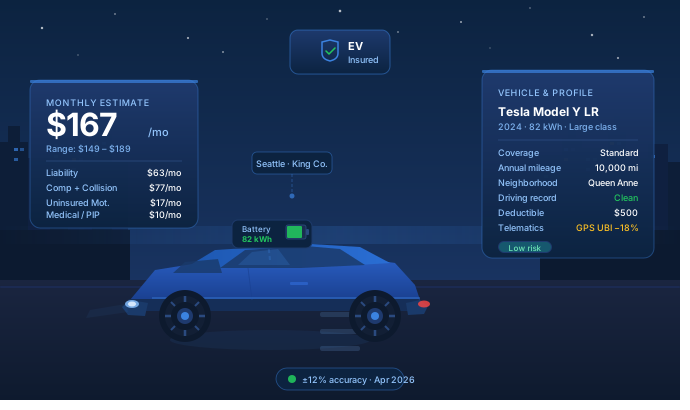
Instantly see a 2026 monthly premium estimate based on live actuarial data — then compare across cities to find your best rate.
The State of EV Insurance in 2026:
Data-Driven Underwriting
In 2026, premium volatility is dictated by localized repair infrastructure. Cities like San Jose and Austin benefit from high concentrations of certified technicians, while New York City rates reflect higher liability exposure.
Usage Analytics
Telematics now dominate 60% of the 2026 market, rewarding low-mileage drivers with precise risk profiling.
V2G Risk Mitigation
Bidirectional charging (Vehicle-to-Home) setups are now standard coverage options in 2026 policies.
Cyber Shield
Advanced 2026 policies include protection against OTA firmware compromises and software liability.
Thermal Safety Index
Insurers monitor real-time battery thermal telemetry to actively lower fire liability premiums for safe users.
Regional Risk Index
Select a city to view 2026 specialized premium profiles.
Why Use Our EV Insurance Tool?
Built specifically for electric vehicles — not repurposed from legacy auto insurance models.
City-Level Accuracy
Rates are calibrated per city using local claims data, not national averages that miss local pricing reality.
EV-Specific Models
Battery pack size, OTA risk, and V2H exposure are factored into every estimate — things legacy calculators ignore.
No Personal Data Required
Get instant estimates without entering your name, email, or driver's license. Zero sign-up friction.
Updated for 2026
Carrier rate filings, repair cost indices, and battery replacement costs are refreshed for the 2026 model year.
Multi-Carrier Index
Estimates are synthesized from 12+ major carriers active in EV insurance — giving you a true market benchmark.
Plain-Language Results
No insurance jargon. Monthly and annual estimates are displayed clearly so you can make informed comparisons fast.
EV Insurance Knowledge Base
Why are EV rates higher in 2026?
Specialized labor for high-voltage systems and advanced sensors remains a cost driver in 2026, despite battery prices falling. California and Texas have the highest density of certified shops, which helps keep local competitive rates stable.
How does DC Fast Charging affect my premium?
Frequent DC Fast Charging impacts battery degradation models, which 2026 insurers use to project vehicle residual value. Some insurers factor "usage intensity" into their long-term value depreciation models.
Does my insurance cover bi-directional charging equipment?
Most 2026 comprehensive policies now include riders for V2H (Vehicle-to-Home) hardware against theft or surge damage, though some require a Home Infrastructure Rider.
Does battery size affect my premium?
Yes. Larger battery packs (100kWh+) increase the "total loss" threshold, representing a higher liability for insurers. Our calculator uses a dynamic sliding scale to factor this risk into your monthly estimate.
Ready to Find Your Rate?
Pick your city and get a 2026 EV insurance estimate in seconds — no account needed.
View City Calculators